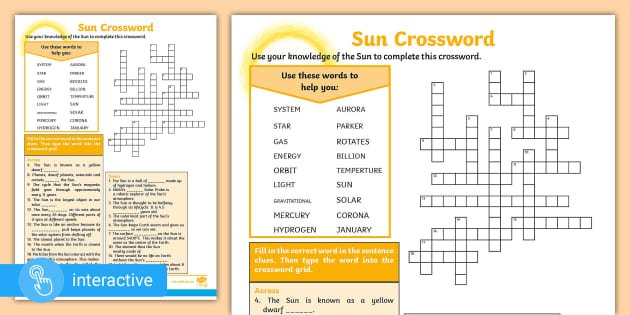

If you’ve ever picked up The Sun newspaper (print or digital) and been drawn compulsively to the daily crossword, you’re not alone. For many, solving The Sun crossword is more than a casual pastime; it’s a ritual, an obsession, and a source of quiet reward. But what makes it so addictive? Why do so many people feel uneasy if they skip a day? In this post, we’ll dive deep into the psychology, design, and human quirks that make The sun crossword downright hard to resist
The Allure of Puzzles
Why do puzzles grip us? On a fundamental level, humans are pattern-seeking animals. We love to spot order in chaos, to impose meaning on randomness, to solve the unknown. Crosswords, with their blend of language, trivia, logic, and lateral thinking, appeal to many parts of our mental machinery simultaneously.
Additionally:
- Guaranteed closure: Unlike many tasks in life with no clear end, a crossword has definite boundaries. You know when it’s done, and that completion gives a satisfying closure.
- Challenge + attainability: A well-constructed crossword is just hard enough to be engaging, but not so hard as to be discouraging.
- Variety with familiarity: Every day’s puzzle is new, but the structure (across/down, crossing letters) is familiar. You’re exploring something fresh within a known shell.
- Cognitive reward: When you recall a word, decode a cryptic wording, or see how intersecting clues reinforce each other, that mental “click” gives a gratifying jolt.
These factors have long been associated with the addictive quality of puzzle games (and crosswords in particular). As one writer put it, the “real serotonin buzz starts when I’ve been stymied on an answer for 10-15 minutes, and then suddenly… the scales literally fall from my eyes.
So the general addiction potential of crosswords is well established. But The Sun crossword has a few extra ingredients that elevate the draw.
The Design Secrets of The Sun Crossword
A puzzle becomes addictive when design choices tug at your brain’s reward system. The Sun crossword (whether in the print edition, app, or online) uses several subtle levers to deepen engagement. While I don’t have access to The Sun’s internal design documents, based on users’ experience and analogies with other newspaper crosswords, these are the likely contributors:
Daily Rhythm & Expectation
- Released daily: You know a puzzle awaits every morning or when you open the app. That anticipation becomes part of your routine.
- Deadlines and recency: Because it’s tied to a specific date or edition, there’s social incentive: others will talk about “today’s puzzle,” hints might circulate, etc.
Balanced Difficulty Curve
Good puzzle editors carefully calibrate daily difficulty. If it’s too easy, it becomes boring; too hard, it becomes frustrating. The Sun often uses a gradient of clue difficulty across the grid (some easier fills, some tougher intersections). That mix ensures the solver is neither bored nor blocked for too long.
The Interlocking Structure
The across/down interplay is a powerful hook: once you get a few crossing letters, you can often deduce previously stuck clues. This cascading effect — one answer unlocking several others — gives momentum and a sensation of progress.
The “Final Word” Frenzy
Many solvers report that near the end — when only one or two cells remain — there is a surge of adrenaline. That’s by design: when nearly solved, you’re invested, and the “finish” is close. That tension makes the resolution all the more satisfying.
Visual and UX Cues (in digital versions)
In the online or app version of The Sun, there may be additional hooks:
- Timers or clocks (even implicit), prompting you to beat your own record
- Wrong-answer warnings or highlights that push you to double-check
- Color changes, animations, or congratulatory messages when you complete a row or the full grid
- Streak counters or days-solved counters (if implemented)
These UX elements subtly reward engagement and encourage you to “just do one more.”
The Brain Chemistry of Solving
At a biological level, the addictive quality comes from your brain’s reward circuits. Here’s how it works:
Dopamine and Reward Prediction
When you correctly fill in a clue or make progress, your brain releases dopamine — a neurotransmitter strongly associated with reward, reinforcement, and learning. Over time, your brain starts to anticipate that reward. Even before finishing a clue, the expectation gives a little dopamine nudge, which encourages you to keep going.
Variable Reward Schedules
One of the most effective forms of habit formation is the variable reward — sometimes you get an easy clue, a hard one, but occasionally you hit a surprising insight. That unpredictability is more compelling than a constant, uniform reward. It’s akin to why gambling can be addictive: you never quite know when the “big hit” will come.
Relief from Cognitive Dissonance
If you struggle with a clue for a while, tension builds. Solving it brings not just the happiness of correctness, but relief, a release of mental friction. That relief is itself rewarding.
Endogenous Motivation & Self-Efficacy
Each time you complete a puzzle, your sense of “I can do this” strengthens. That boosts confidence and makes you more likely to return tomorrow. Over time, the crossword becomes part of your identity: “I am a crossword solver.”
Habit Loops, Streaks, and Social Proof
Beyond internal chemistry, external and behavioral structures reinforce the addiction.
Habit Loop (Trigger → Action → Reward)
Every day (or at your usual time), the newspaper or app acts as a trigger. You feel the urge to “just check” the puzzle. You open your grid and do a few clues (action). The reward is mental satisfaction, progress, or the pleasurable feedback of filling in squares. Over time, this loop becomes automatic, with little conscious resistance.
Streaks & Consistency
Humans hate breaking a streak. If The Sun or its app tracks “days solved in a row,” you become motivated to maintain that unbroken chain. Even on days you’re tired or distracted, the desire to avoid “breaking the chain” can push you to engage.
Social Circles & Peer Pressure
In many places, people talk about “today’s crossword clue” — in offices, chats, or on social media. If your coworkers, friends, or family are solving The Sun crossword, you may feel left out if you don’t. Conversations may center around “Did you get 24-Across?” That social proof reinforces your habit.
FOMO (Fear of Missing Out)
If you skip a day, you may feel a mild regret: “I wonder what the theme was,” or “I missed a tricky clue.” That regret nudges you back in.
Satisfaction vs. Frustration: The Sweet Spot
A puzzle that’s too easy is boring. One that’s too hard is draining. Addictive puzzles tend to hit the “flow zone” — where challenge and your skill are balanced. Here’s how The Sun crossword (and good crosswords generally) maintain that balance:
- Gradual obstacle escalation: The first few clues are easier, warming you up. Then gradually, tougher ones appear.
- Crossing clue support: Even if one clue is super tricky, the intersecting letters from others provide hints.
- Avoiding dead ends: A good puzzle avoids isolated “islands” — clusters of unsolvable clues that isolate from the main grid.
- The “aha” moments: The highlight of any crossword is the moment you break through a wall of difficulty and see the revelation. That moment is intensely satisfying and often fuels the addictive loop.
As one puzzle enthusiast noted: “The biggest thing was just the satisfaction of doing a crossword vs. doing my work… As long as you’re solving, you’re getting somewhere… you get the validation of … the little jingle when you figure it out.” (Reddit) That “little jingle” metaphorically (or literally in digital versions) highlights the reward signal.
Cognitive Benefits That Mask the Hook
One reason the addiction feels benign — even virtuous — is that crosswords genuinely offer mental benefits. That makes you feel justified in spending time on them. Some of these benefits include:
Vocabulary & Language Skill
You’re exposed to words and meanings, sometimes obscure, which enrich your lexicon. Over time, you recall more synonyms, homophones, and unusual words. That sense of growth reinforces the habit.
Mental Agility & Problem-Solving
Crosswords cultivate flexible thinking, lateral associations, and clue-decoding skills. That sharpening of mental muscles feels rewarding in itself.
Memory & Retrieval Training
You recall prior knowledge — proper names, trivia, idioms — and occasionally dredge from the recesses of your memory. This retrieval practice strengthens neural pathways.
Stress Relief and Focus
Ironically, concentrating on a puzzle can be meditative — you shut out distractions and immerse your mind in a narrow zone of focus. That offers a respite from daily worries, and many people look forward to that mental break.
Because you feel you are improving yourself (or at least exercising your brain), it’s easier to rationalize extended time spent doing crosswords.
The Risk of Overdoing It
Though The Sun crossword is generally harmless and even beneficial, any compelling habit has the potential to become excessive. Here are some risks and warning signs:
Time Overrun & Neglect
When you catch yourself spending hours to get one tricky clue, or neglecting other tasks because “just one more” is too tempting, you may be overindulging.
Sleep Disruption
If you’re solving late into the night, your sleep schedule can suffer. The mental arousal can make it harder to “switch off.”
Frustration Cycle
If a clue stays unsolved, it may breed negative emotion. You come back repeatedly, more frustrated. That tension can reduce enjoyment over time.
Identity Traps
If you start equating your self-worth with how well (or quickly) you solve crosswords, you risk letting it become too central to your identity.
Social Displacement
If you choose solving over social interaction, or bring your puzzle into every idle moment, it may crowd out other healthy habits.
That said, most people can enjoy The Sun crossword without sliding into extremes — especially if they maintain perspective.
How to Enjoy It (Without Letting It Take Over)
If you love The Sun crossword but want to keep it in balance, here are tips and strategies:
Time-box Yourself
Decide in advance: “I’ll spend up to 20 minutes now, then stop.” Use a timer if needed. If you don’t finish, you can return later, but avoid letting it swallow an hour.
Skip Strategically
If a clue is giving no traction after a few minutes, move on, fill other clues, then return. Avoid looping on one stuck spot.
Alternate with Other Activities
Alternate puzzle time with walks, reading, conversation, or other hobbies to prevent crossword solving from dominating.
Reflect on Purpose
Sometimes ask: Why am I doing this? Is it for fun, relaxation, brain training, or to chase a streak? If motivation shifts, reconsider whether you need a short break.
Share & Collaborate
Solving with a friend or family member sometimes diffuses the “addictive” angle. It becomes a shared game rather than a lone obsession.
One-Puzzle-a-Day Rule (if in app)
If using a subscription or app version, restrict yourself to one puzzle per day. That helps cure the “just one more” compulsion.
Keep It Optional
Some days, skip it. Remind yourself: missing a day doesn’t break your identity as a solver. After all, puzzle editors expect some people will skip now and then.
Wrapping Up
The Sun crossword is more addictive than many casual puzzlers realize — but not in a sinister way. It’s a carefully calibrated mix of challenge, reward, variety, identity, and brain chemistry. When combined with habit triggers, streaks, social cues, and well-designed structure, it becomes something you don’t just do — you look forward to.
Yet, the very traits that make it addictive are also what make it rewarding: mental exercise, satisfaction of completion, and moments of insight. The trick is to enjoy it mindfully, letting it enrich your day without swallowing it.
If you’re a fan of The Sun crossword, embrace it — but keep your boundaries. And if you’ve ever felt uneasy at missing a day, know you’re tapping into a deep human impulse for patterns, mastery, and completion.
Would you like me to help you craft similar posts for other puzzles (Daily Mail, Guardian cryptics, etc.), or to break this down into SEO sections with keywords and meta descriptions?
Frequently Asked Questions (FAQs)
- What is the 5-letter word meaning of The Sun?
The 5-letter word for “The Sun” is SOLAR.
- Have again crossword clue (4 letters)?
The 4-letter answer for “Have again” is RETA.
- What is the crossword for “Charge” (3 letters)?
The 3-letter crossword answer for “Charge” is FEE.


Pingback: Card Game Crossword Clue: A Complete Guide for Puzzle Lovers - Servicework.co.uk